The Role of the Coffee Table in Living Room Planning


A coffee table is often treated as a finishing detail, but in a well-planned living room it plays a much larger role. It helps define the seating zone, supports circulation and gives the room a clearer visual centre.
Discuta cu echipa Nobili Design
Discutam despre proiectul tau?
Scrie-ne pe WhatsApp ce spatiu amenajezi si ce servicii doresti. Revenim cu pasii potriviti.
Scrie-ne pe WhatsAppTelefon: 0720.665.365
E-mail: nobilidesign@gmail.com

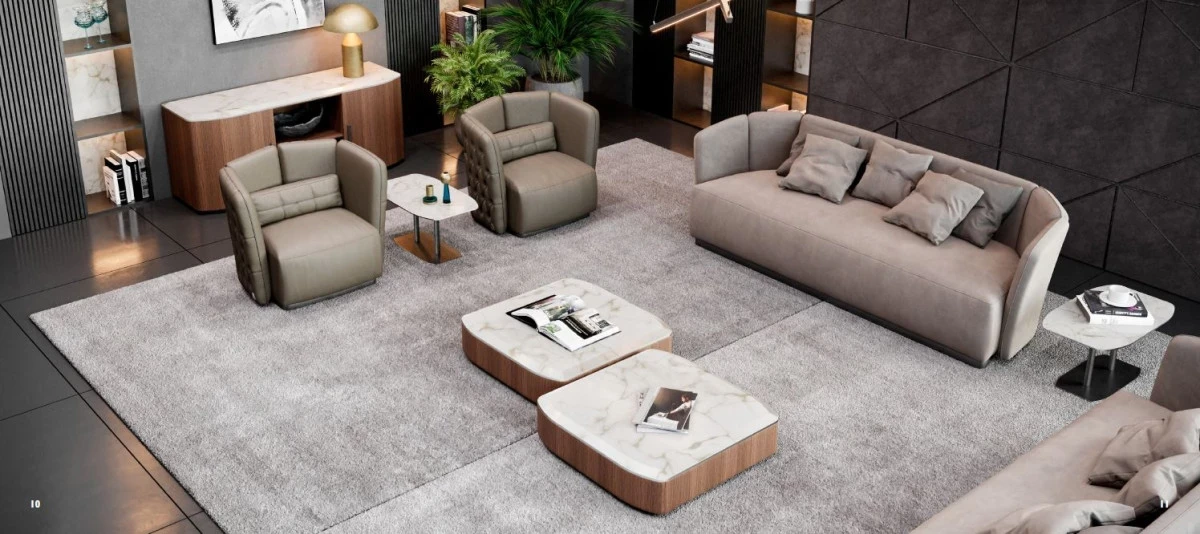
In many interiors, the coffee table is chosen late, after the sofa, armchairs and larger furniture pieces are already in place. Yet this is often the element that decides whether the living room feels complete or unresolved. A coffee table does more than fill the empty space between seats. It helps organise the conversation area, establish scale and connect the room visually.
That role becomes even more important in premium interiors, where proportions and material balance matter as much as individual products. A living room may include a beautiful sofa and refined finishes, but if the central table is the wrong size, shape or weight, the composition can still feel awkward. Good planning starts by understanding the function of the piece before narrowing the style.
Why the coffee table matters so much
The coffee table usually sits at the centre of the seating arrangement, which means it affects how the room works every day. It supports practical use, from placing books and drinks to creating an accessible surface near the sofa. At the same time, it acts as a visual anchor. Without it, the seating area may feel scattered. With the right one, the room feels more coherent and easier to read.
This balance between function and composition is what makes the coffee table so important. It is one of the few pieces that must work equally well for comfort, circulation and visual order. That is why it should be considered part of the living room plan itself, not only a decorative addition at the end.
The coffee table as the centre of the seating zone
A sofa and a pair of chairs can define a conversation area in principle, but the arrangement often feels stronger when a central element connects them. The coffee table performs that role. It creates a reference point that brings the seating together and helps the composition feel intentional.
In larger living rooms, this is especially useful because it prevents the seating arrangement from feeling too spread out. In smaller rooms, it helps give the space structure without adding excessive visual weight. In both cases, the coffee table is not simply a practical surface. It is part of the room’s geometry.
How size affects living room balance
One of the most common mistakes in living room planning is using a coffee table that is the wrong size for the seating area. A table that is too small can feel lost and ineffective. A table that is too large can make circulation difficult and reduce the comfort of the room. The right size is usually the one that feels proportionate to the sofa and to the overall footprint of the seating arrangement.
When the scale is correct, the room feels calmer and more stable. The eye reads the composition more easily, and the furniture begins to work as one connected zone rather than as separate objects. This is one reason why a good coffee table can improve a room immediately, even without changing anything else.
Why shape changes the layout
Shape influences how the room flows. A rectangular coffee table often works well with straight sofas and more linear arrangements because it reinforces the horizontal direction of the seating. A round or oval table can soften circulation and reduce visual rigidity, especially in smaller rooms or in layouts where movement needs to feel lighter.
A square option may suit broader arrangements or larger seating zones, particularly when the conversation area is more symmetrical. The important point is that shape should support the layout, not fight against it. Different rooms need different geometry, and the coffee table is often where that becomes most visible.
Circulation and everyday comfort
Living room planning is not only about how the room looks from a distance. It is also about how people move through it. A coffee table affects that movement directly. If it sits too close to the sofa, the seating can feel cramped. If it sits too far away, the arrangement feels disconnected and less useful. Good spacing helps the room remain comfortable in everyday life while also preserving visual order.
This is particularly important in compact interiors, where one wrong proportion can make the room feel tighter than it really is. In larger living rooms, circulation matters just as much because distance can easily weaken the sense of connection between seating pieces. In both cases, the coffee table plays a central role in how movement is experienced.
Material and visual weight
The coffee table also influences how heavy or light the living room feels. Glass can keep the composition more open. Wood can make the room feel warmer and more grounded. Stone or mixed materials can introduce a stronger premium effect, but they also need the right scale and surrounding balance. A heavy material in the wrong room can dominate too much, while a very light piece can disappear if the seating already has strong visual presence.
This is why material choice should follow layout logic. The right finish is not only the one that looks beautiful on its own, but the one that helps the room feel resolved. When material, scale and shape work together, the coffee table becomes part of the architecture of the living room rather than just another object placed in it.
The relationship with sofas and seating
The coffee table is always read in relation to the seating around it. With a long straight sofa, the table usually needs a strong horizontal relationship. With a sectional, the table often needs to support a wider central zone. In more layered living rooms with multiple seats, the table should help unify the arrangement rather than follow only one furniture line.
This is one reason why the best coffee table is rarely chosen in isolation. It should be selected as part of the full seating composition, with the sofa layout clearly in mind. When that happens, the room feels more natural and far easier to use.
Common planning mistakes
Treating the coffee table as an afterthought
When the coffee table is chosen too late, it often ends up correcting problems it was never meant to solve. A better approach is to consider it from the moment the seating area is planned.
Choosing only by style
A visually attractive piece can still fail in the room if the proportion is wrong. Shape, size and placement matter just as much as finish and design language.
Ignoring the room rhythm
Every living room has a rhythm created by furniture lines, circulation and visual weight. The coffee table should support that rhythm, not interrupt it.
Planning before buying
The most successful living rooms are usually the ones where the coffee table is chosen as part of a larger composition. Once the seating area is defined clearly, it becomes much easier to understand what type of table is needed, how much presence it should have and how it should relate to the rest of the room.
For readers who want to move from layout logic into product selection, it helps to explore coffee tables with the sofa arrangement and the room scale already in mind. A more precise decision usually leads to a living room that feels more balanced, more usable and more complete.
Choosing the right coffee table requires understanding your space. Depending on your specific home needs, it can be much easier to select furniture from a specialized source. By accessing https://ro.nobili-design.com you can discover how to integrate luxury pieces into your living room planning. Their professional approach helps you balance aesthetics and utility, transforming any room into a sophisticated environment.
Frequently asked questions
Why is the coffee table important in living room planning?
Because it helps organise the seating area, supports circulation and creates a visual centre that connects the room more clearly.
Should the coffee table be chosen after the sofa?
It can be selected after the sofa, but it should still be planned as part of the seating composition, not treated as a purely decorative last step.
Does shape matter as much as size?
Yes. Shape changes circulation and the visual rhythm of the room, while size affects proportion and comfort.
What makes a coffee table feel too heavy in a room?
The combination of scale, material and placement can create too much visual weight if it does not match the seating area and the room footprint.